The Business Class
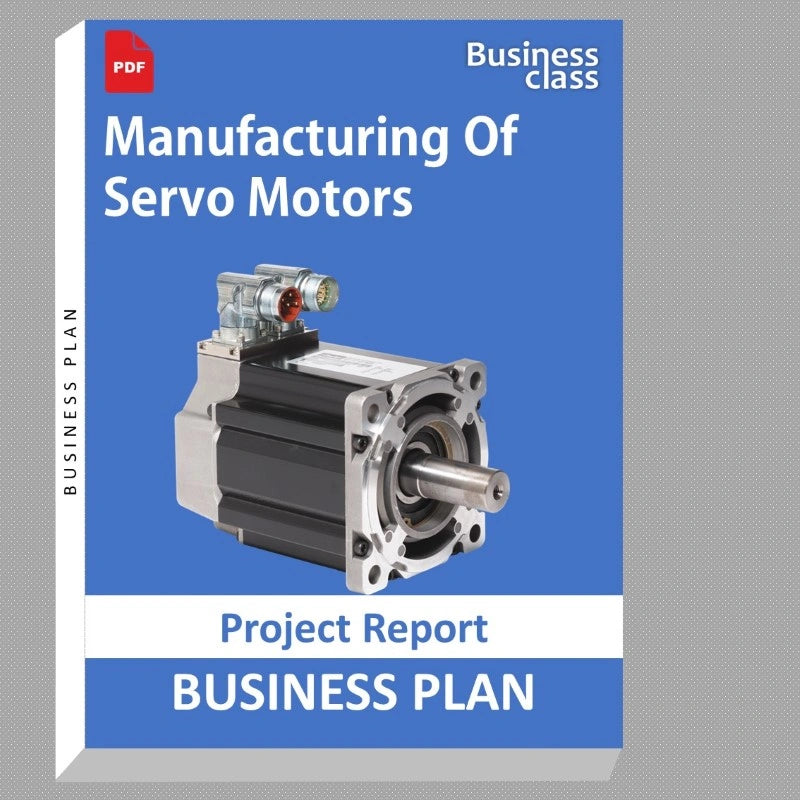
Manufacturing Of Servo Motors Project Report and Business Guides Bundle
Manufacturing Of Servo Motors Project Report and Business Guides Bundle
Couldn't load pickup availability
Product Description
All In One Manufacturing Of Servo Motors Project Report and Business Guides Bundle
Starting a manufacturing business for servo motors in India can be a strategic and promising venture for several reasons:
- Industrial Automation Growth: The demand for servo motors is closely tied to the growth of industrial automation. As industries increasingly adopt automation solutions, there is a rising demand for high-performance servo motors.
- Precision and Control: Servo motors are known for their precision, accuracy, and control capabilities. Industries such as robotics, CNC machinery, and manufacturing rely on servo motors for precise movement and positioning.
- Diverse Applications: Servo motors find applications in various sectors, including robotics, aerospace, automotive, medical equipment, and industrial machinery. This diversity allows for a broad customer base.
- Technological Advancements: Staying updated with technological advancements in servo motor design, feedback systems, and control algorithms is crucial to producing state-of-the-art products.
- Energy Efficiency: Servo motors are known for their energy-efficient operation, making them desirable for industries seeking to reduce energy consumption. Manufacturing energy-efficient servo motors can attract environmentally conscious customers.
- OEM Collaboration: Collaborating with original equipment manufacturers (OEMs) or manufacturers of automated machinery can lead to partnerships for supplying servo motors for new equipment.
- Export Opportunities: If the business maintains high-quality standards, there may be opportunities to export servo motors to international markets where automation adoption is on the rise.
- Customization: Offering customized servo motors tailored to specific industrial applications or performance requirements can be a competitive advantage.
- Online Presence: Establishing an online presence through a website or digital platforms can enhance visibility, attract potential customers, and facilitate online inquiries.
- Quality Control Measures: Implementing stringent quality control measures during the manufacturing process ensures the production of reliable and high-performance servo motors.
- Research and Development: Investing in research and development activities can lead to the innovation of servo motors with improved efficiency, reduced heat generation, and enhanced feedback systems.
- Supply Chain Management: Establishing efficient supply chain management for sourcing quality components ensures the timely and cost-effective production of servo motors.
- Collaboration with Industries: Building relationships with industries that heavily rely on servo motors, such as robotics, CNC machining, and automation, can lead to long-term contracts and steady business.
- Educational Initiatives: Providing educational content about the benefits of using servo motors, applications in different industries, and maintenance practices can enhance customer awareness.
- Environmental Considerations: Exploring environmentally friendly materials and manufacturing processes aligns with the global trend toward sustainability.
Before starting a manufacturing business for servo motors in India, entrepreneurs should conduct thorough market research, invest in modern manufacturing technology, and ensure compliance with industry standards. Building strong relationships with OEMs, staying informed about industry trends, and effective marketing strategies are essential for the success of the business in the manufacturing sector.
Business Details in This eBook | Applicable for Bank Loan and other government grants | A resource to equip entrepreneurs with business knowledge and skills.
1. Manufacturing Of Servo Motors Project Report
- Product & its application
- Desired qualifications for promoter
- Industry outlook/trend
- Market potential and marketing issues
- Raw material requirements
- Manufacturing process
- Manpower requirement
- Implementation schedule
- Cost of project (business)
- Means of finance
- Working capital requirements
- List of machinery required
- Profitability calculations
- Break even analysis
- Statutory/ government approvals
- Backward and forward integration
- Training centers/courses
- Business templet
2. Business Idea Generation Guide
PART I – YOU AS AN ENTREPRENEUR
PART II – A MARKET IS WAITING FOR YOU
PART III – YOUR OWN BUSINESS IDEA LIST
PART IV - THE BEST BUSINESS IDEAS FOR YOU
PART V - YOUR OWN BUSINESS IDEA
3. How to start Business Guide
PART I - ASSESS YOUR READINESS TO START A BUSINESS
PART II - THE BUSINESS PLAN
PART III - REINFORCE YOUR BUSINESS IDEA
PART IV - THE MARKETING PLAN
PART V - STAFF
PART VI - ORGANIZATION AND MANAGEMENT
PART VII - BUYING FOR YOUR BUSINESS
PART VIII - GREENING YOUR BUSINESS
PART IX - COSTING YOUR GOODS AND SERVICES
PART X - FINANCIAL PLANNING
PART XI - REQUIRED STARTUP CAPITAL
PART XII - TYPES AND SOURCES OF STARTUP CAPITAL
PART XIII - STARTING THE BUSINESS
4. People and Productivity in Business Guide
PART I - LINKING PEOPLE AND PRODUCTIVITY
PART II - INFLUENCING PRODUCTIVITY
PART III - PEOPLE, PRODUCTIVITY AND PLANNING
PART IV - RECRUITING PRODUCTIVE PEOPLE
PART V - HOW TO ENCOURAGE STAFF PRODUCTIVITY?
PART VI - WORKPLACE AND PRODUCTIVITY
PART VII - WORKPLACE CULTURE AND PRODUCTIVITY
PART VIII - MANAGING EMPLOYEE COMPLEXITIES
PART IX - BUSINESS RELATIONS AND PRODUCTIVITY
5. Business Planning Guide
PART I - PLANNING FOR THE FUTURE
PART II - DOING A BUSINESS ANALYSIS
PART III - FORECASTING CHANGES IN THE EXTERNAL ENVIRONMENT
PART IV - MANAGING RISK
PART V - MAKING PLANS
6. Coasting in Business Guide
PART I - KNOW YOUR COSTS
PART II - COSTING FOR A MULTIPLE PRODUCT MANUFACTURER OR SERVICE OPERATOR
PART III - COSTING FOR A SINGLE PRODUCT MANUFACTURER OR SERVICE OPERATOR
PART IV - COSTING FOR A RETAIL OR WHOLESALE BUSINESS
7. Marketing your Product or Service Guide
PART I - MARKETING AND YOUR BUSINESS
PART II – POSITIONING YOUR PRODUCT
PART III - PRODUCT
PART IV - PRICE
PART V - PLACE
PART VI - PROMOTION
PART VII - PEOPLE
PART VIII – PROCESS
PART IX - PHYSICAL EVIDENCE
8. Buying and Stock Control Guide
PART I - BUYING WELL FOR YOUR BUSINESS
PART II - CONTROLLING YOUR STOCK AFTER BUYING
PART III - MANAGING RELATIONSHIPS WITH YOUR SUPPLIERS
STOCK CONTROL FORMS
9. Record Keeping (Accounting) Guide
PART I - KEEPING BUSINESS RECORDS
PART II - A SIMPLE SYSTEM OF KEEPING RECORDS
PART III - USE RECORDS TO IMPROVE YOUR BUSINESS
RECORD KEEPING FORMS
In its entirety, this comprehensive PDF comprises over 800 pages encompassing a collection of 9 distinct ebooks. Designed with entrepreneurs and business owners in mind, these resources serve as a systematic guide, offering an in-depth exploration of diverse facets integral to the business realm.
Note: Kindly review your email correspondence subsequent to completing the payment process. The designated ebook, formatted as a PDF document, will be dispatched to your email address, enabling you to proceed with the download. We recommend inspecting both your junk and spam folders to ensure comprehensive retrieval. You should anticipate receipt of two separate emails: the first will contain your order confirmation, while the second will facilitate the download of the PDF file. Should you encounter any challenges during this process, please do not hesitate to contact us via WhatsApp at 8897066866 or by sending an email to info@thebusinessclass.org. We stand ready to assist you.
Disclaimer: This is a sample report designed to provide basic information to entrepreneurs preparing a project report to start a business. Starting a business differs from case to case, with various factors such as price, location, market, customer, product, quality, raw material, time, budget, skills, competition, process, finance, profits, and industry trends influencing the setup of a business. The project report and business guides are distinct yet complementary products tailored to assist entrepreneurs. Presented as a comprehensive package, these resources offer valuable insights without a direct interdependence.
The buyer of this project report should not consider it a final document to be used for starting a business or applying for a loan or grant. It may need to be modified, customized, and corrected before it can be used for a loan, grant, or government scheme. If an unintentional error or inaccuracy is discovered, no responsibility is accepted. Furthermore, details, context, data, numbers, definitions, explanations, and calculations are provided for information purposes only and do not constitute a recommendation.
Share