The Business Class
Home Automation Products Store Detailed Project Report – DPR & Business Plan
Home Automation Products Store Detailed Project Report – DPR & Business Plan
Couldn't load pickup availability
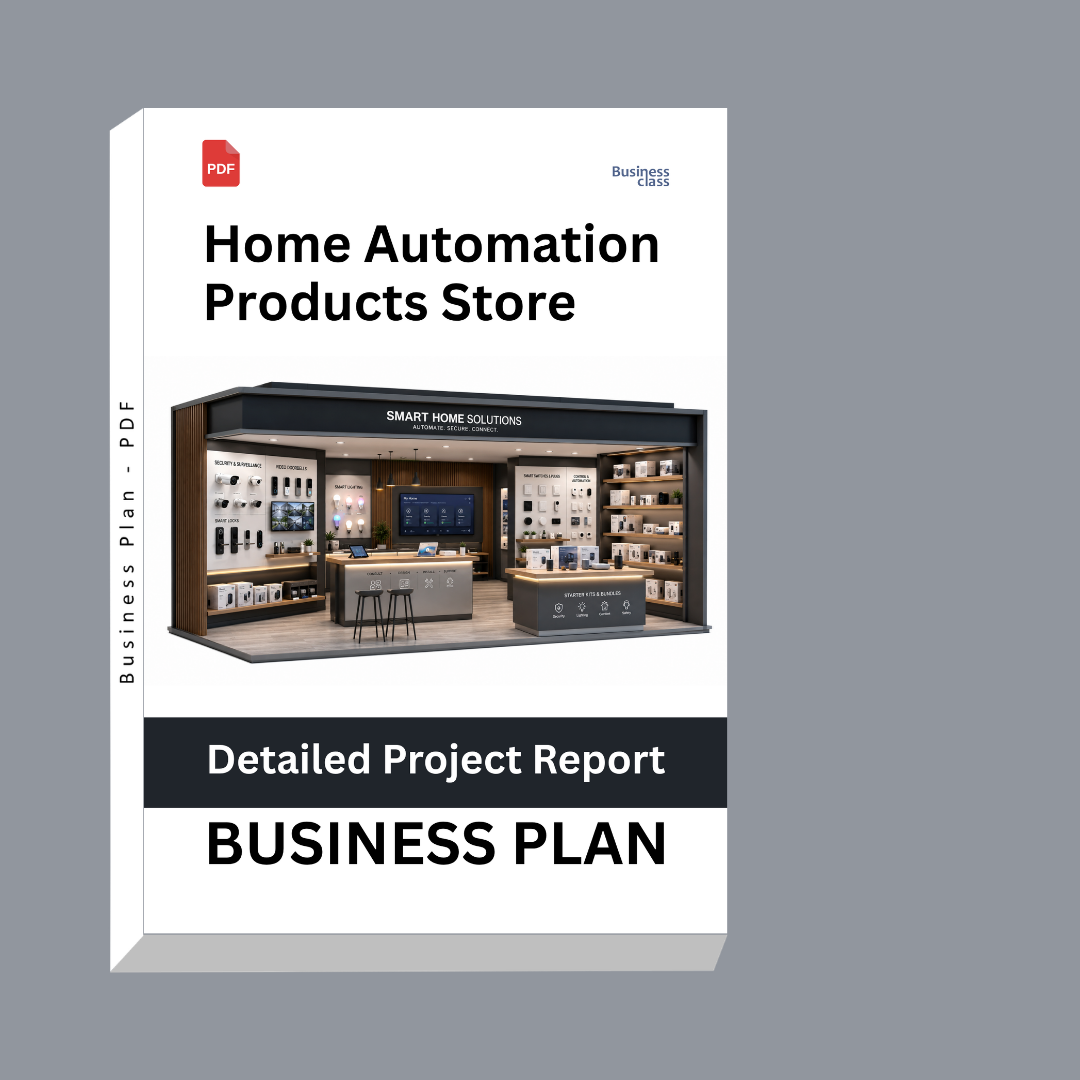
The Home Automation Products Store Business Plan is a 46-page PDF eBook designed for entrepreneurs, smart-home retailers, consultants, students and business planners interested in evaluating or starting a specialist home automation retail business.
Structured as a Detailed Project Report (DPR) and Business Plan, it covers market research, product strategy, pricing, marketing, staffing, demonstrations, installation coordination, store operations, infrastructure, inventory, startup capital, cash flow, working capital, break-even analysis, risks, KPIs and launch preparation.
Business Overview
The eBook examines a Home Automation Products Store operating as a demo-led specialist retailer rather than a general electronics shop.
The proposed product range includes:
• Smart security kits
• Video doorbells
• Smart locks and access products
• Smart lighting and plug packs
• Smart switches and controllers
• Starter bundles and use-case combinations
The model combines physical demonstrations, consultative selling, compatibility guidance, local delivery, installation coordination and post-sale support.
It emphasizes a curated mid-market assortment, controlled inventory, customer advances for selected special orders, disciplined replenishment and regular stock review.
What the Reader Will Learn
Readers can study how to:
• Define a specialist smart-home retail concept
• Identify household and smart-device customer needs
• Structure security, access, lighting and control categories
• Develop pricing and margin strategies
• Apply the 7Ps of specialist electronics retail marketing
• Create starter smart-home bundles
• Demonstrate products effectively
• Explain app functions and device features
• Check product and ecosystem compatibility
• Guide customers on installation requirements
• Prepare quotations and special orders
• Collect advances where appropriate
• Use digital, referral and in-store lead channels
• Select and manage suppliers
• Receive and inspect incoming products
• Check specifications, accessories and product condition
• Organize inventory by SKU and compatibility
• Monitor fast- and slow-moving devices
• Reduce excessive stock exposure
• Establish disciplined reorder routines
• Coordinate delivery and installation support
• Handle post-sale enquiries and follow-up
• Organize owner, sales and technical responsibilities
• Estimate opening inventory and startup capital
• Develop sales, cost, profit and cash-flow plans
• Calculate break-even requirements
• Review financing assumptions
• Test downside, base and upside scenarios
• Manage working capital
• Monitor operating KPIs
• Prepare launch actions and risk controls
Major Subjects Covered
The eBook includes an executive summary, business concept, customer analysis, market research and marketing strategy covering product, price, place, promotion, people, process and physical evidence.
Operational sections cover procurement, inspection, display, demonstrations, customer consultation, quotations, sales, delivery, installation coordination, post-sale support and replenishment.
Store setup topics include:
• Specialist retail premises
• Demonstration area
• Demo boards and sample doors
• Product display fixtures
• Customer consultation area
• Sales and billing counter
• Back-stock storage
• POS and IT equipment
• Security equipment
• Electrical requirements
• Backup power
• Small installation tools
• Packaging materials
• Opening inventory
• Internet and utilities
Financial planning includes product costing, monthly sales estimates, fixed and variable expenses, profit planning, cash flow, startup capital, financing assumptions, working capital, break-even and scenario analysis.
Additional sections cover capacity utilization, founder readiness, launch planning, first-year KPIs, assumptions, risks, mitigation measures and final viability assessment.
Who This eBook Is For
This eBook may be useful for:
• Entrepreneurs planning a Home Automation Products Store
• Existing smart-home and electronics retailers
• Security and access-control sellers
• Home automation installers
• Consultants preparing Business Plans or DPRs
• Students studying technical retail models
• Prospective borrowers preparing funding discussions
Product Specifications
Product Type: Business Planning eBook
Format: PDF
Subject: Home Automation Products Store
Planning Format: Detailed Project Report (DPR) and Business Plan
Language: English
Page Count: 46 pages
Business Model: Demo-led specialist retail with consultative selling and installation coordination
Product Coverage: Smart security kits, video doorbells, smart locks, access products, lighting and plug packs, smart switches and controllers.
Coverage: Market research, marketing, staffing, operations, infrastructure, inventory, costing, sales, profit, cash flow, startup capital, financing, break-even, scenarios, working capital, KPIs, risks and launch planning.
Frequently Asked Questions
1. What business does this eBook cover?
A specialist retail store selling smart-home and home-automation products.
2. What products are included?
Smart security kits, video doorbells, smart locks, lighting products, smart plugs, switches and controllers.
3. Does it cover demonstrations and installation?
Yes. Product demonstrations, compatibility guidance and installation coordination are included.
4. Does it cover inventory management?
Yes. SKU control, slow-moving stock, special-order controls, reordering and working-capital management are addressed.
5. Is financial planning included?
Yes. It covers sales, costs, profit, cash flow, startup capital, break-even and scenarios.
6. Can the figures be used directly?
No. Costs, demand, financing, supplier terms, regulations and operating assumptions should be independently validated.
Disclaimer
This eBook is for educational and business-planning purposes only. Financial estimates, market assumptions and operating inputs require independent validation. Device compatibility, wireless protocols, voltage and electrical ratings, app requirements, network connectivity, cybersecurity and privacy considerations, smart-lock fitment, installation requirements, manufacturer specifications, warranties, product authenticity, supplier documentation, building or electrical rules, legal, tax, regulatory, financing, insurance and commercial conditions vary by product and jurisdiction. Readers should conduct due diligence and obtain appropriate electrical, security, IT, installation or professional advice before making business, investment or operational decisions.
Share