The Business Class
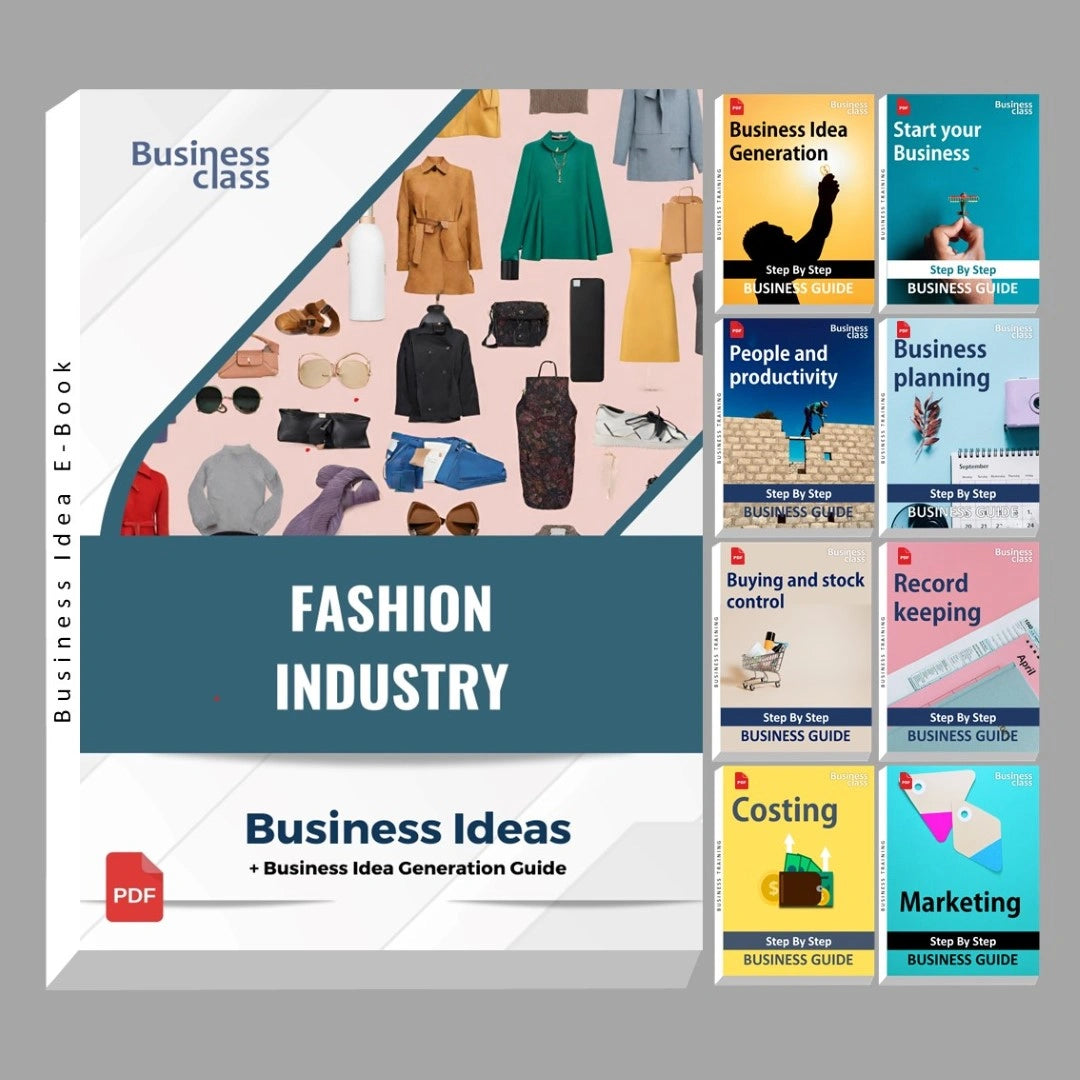
Fashion industry business ideas book with business training guide bundle
Fashion industry business ideas book with business training guide bundle
Couldn't load pickup availability
Fashion industry business ideas book with business training guide bundle
The fashion industry in India is a dynamic and rapidly growing sector, offering entrepreneurs a plethora of business opportunities across various segments. From clothing and accessories to sustainable fashion and online retail, entrepreneurs can explore diverse avenues within this vibrant industry.
Clothing manufacturing is a foundational opportunity. Entrepreneurs can establish production units for clothing, focusing on design, quality, and niche markets. Specializing in specific types of apparel, such as ethnic wear or activewear, allows businesses to target specific consumer preferences.
Fashion retail, both offline and online, remains a key segment. Entrepreneurs can establish brick-and-mortar stores or venture into e-commerce platforms, capitalizing on the growing trend of online shopping. Curating a unique collection, offering personalized shopping experiences, and leveraging digital marketing contribute to the success of retail businesses.
Ethnic and traditional wear present niche opportunities. Entrepreneurs can specialize in the production and retail of traditional Indian clothing, catering to a market that values cultural authenticity. Innovations in design, materials, and customization enhance the competitiveness of such businesses.
Sustainable fashion is gaining prominence. Entrepreneurs can focus on eco-friendly and ethically produced clothing. Incorporating sustainable practices, such as using organic materials and ethical manufacturing processes, appeals to environmentally conscious consumers.
Accessories and jewelry businesses complement the fashion sector. Entrepreneurs can explore opportunities in designing, manufacturing, and retailing accessories like handbags, footwear, and jewelry. Offering unique, handmade, or customizable items distinguishes these businesses in a competitive market.
Fashion tech and e-commerce platforms are thriving. Entrepreneurs can delve into the tech-driven aspects of fashion, such as developing fashion apps, virtual fitting rooms, or AI-driven personalized shopping experiences. Leveraging technology enhances customer engagement and convenience.
Customized and personalized fashion services cater to individual preferences. Entrepreneurs can establish businesses offering tailor-made clothing, personalized styling services, or made-to-order fashion items. Focusing on a personalized customer experience fosters customer loyalty.
Fashion events and shows are integral to the industry. Entrepreneurs can organize fashion shows, pop-up events, or collaborate with designers to showcase their collections. Creating a platform for emerging designers and fostering collaborations enhances the visibility of such events.
Collaborations with influencers and celebrities can significantly impact brand visibility. Entrepreneurs can explore partnerships for product endorsements, collaborations, or influencer marketing. Leveraging social media and online platforms amplifies brand reach in the digital age.
Government initiatives promoting the textile and apparel sector create a favorable environment for entrepreneurs. Staying abreast of fashion trends, consumer preferences, and adopting sustainable and ethical practices are crucial for success in the ever-evolving fashion industry.
In conclusion, the fashion industry in India offers entrepreneurs a wide spectrum of opportunities. By exploring clothing manufacturing, retail, ethnic wear, sustainable fashion, accessories, fashion tech, customization, events, and collaborations, entrepreneurs can navigate this dynamic sector and contribute to the evolving landscape of Indian fashion.
Details in This eBook | A resource to equip entrepreneurs with business ideas, knowledge and skills.
1. Ideas
Entrepreneurs in India have a plethora of opportunities to explore, thanks to the country's diverse and dynamic business landscape. Understanding the variety of options available is crucial for those looking to venture into the entrepreneurial realm. This section covers some ideas with brief descriptions to inspire and guide aspiring entrepreneurs.
2. Business Idea Generation Guide
PART I – YOU AS AN ENTREPRENEUR
PART II – A MARKET IS WAITING FOR YOU
PART III – YOUR OWN BUSINESS IDEA LIST
PART IV - THE BEST BUSINESS IDEAS FOR YOU
PART V - YOUR OWN BUSINESS IDEA
3. How to start Business Guide
PART I - ASSESS YOUR READINESS TO START A BUSINESS
PART II - THE BUSINESS PLAN
PART III - REINFORCE YOUR BUSINESS IDEA
PART IV - THE MARKETING PLAN
PART V - STAFF
PART VI - ORGANIZATION AND MANAGEMENT
PART VII - BUYING FOR YOUR BUSINESS
PART VIII - GREENING YOUR BUSINESS
PART IX - COSTING YOUR GOODS AND SERVICES
PART X - FINANCIAL PLANNING
PART XI - REQUIRED STARTUP CAPITAL
PART XII - TYPES AND SOURCES OF STARTUP CAPITAL
PART XIII - STARTING THE BUSINESS
4. People and Productivity in Business Guide
PART I - LINKING PEOPLE AND PRODUCTIVITY
PART II - INFLUENCING PRODUCTIVITY
PART III - PEOPLE, PRODUCTIVITY AND PLANNING
PART IV - RECRUITING PRODUCTIVE PEOPLE
PART V - HOW TO ENCOURAGE STAFF PRODUCTIVITY?
PART VI - WORKPLACE AND PRODUCTIVITY
PART VII - WORKPLACE CULTURE AND PRODUCTIVITY
PART VIII - MANAGING EMPLOYEE COMPLEXITIES
PART IX - BUSINESS RELATIONS AND PRODUCTIVITY
5. Business Planning Guide
PART I - PLANNING FOR THE FUTURE
PART II - DOING A BUSINESS ANALYSIS
PART III - FORECASTING CHANGES IN THE EXTERNAL ENVIRONMENT
PART IV - MANAGING RISK
PART V - MAKING PLANS
6. Coasting in Business Guide
PART I - KNOW YOUR COSTS
PART II - COSTING FOR A MULTIPLE PRODUCT MANUFACTURER OR SERVICE OPERATOR
PART III - COSTING FOR A SINGLE PRODUCT MANUFACTURER OR SERVICE OPERATOR
PART IV - COSTING FOR A RETAIL OR WHOLESALE BUSINESS
7. Marketing your Product or Service Guide
PART I - MARKETING AND YOUR BUSINESS
PART II – POSITIONING YOUR PRODUCT
PART III - PRODUCT
PART IV - PRICE
PART V - PLACE
PART VI - PROMOTION
PART VII - PEOPLE
PART VIII – PROCESS
PART IX - PHYSICAL EVIDENCE
8. Buying and Stock Control Guide
PART I - BUYING WELL FOR YOUR BUSINESS
PART II - CONTROLLING YOUR STOCK AFTER BUYING
PART III - MANAGING RELATIONSHIPS WITH YOUR SUPPLIERS
STOCK CONTROL FORMS
9. Record Keeping (Accounting) Guide
PART I - KEEPING BUSINESS RECORDS
PART II - A SIMPLE SYSTEM OF KEEPING RECORDS
PART III - USE RECORDS TO IMPROVE YOUR BUSINESS
RECORD KEEPING FORMS
In its entirety, this comprehensive PDF comprises over 800 pages encompassing a collection of 9 distinct ebooks. Designed with entrepreneurs and business owners in mind, these resources serve as a systematic guide, offering an in-depth exploration of diverse facets integral to the business realm.
Note: Kindly review your email correspondence subsequent to completing the payment process. The designated ebook, formatted as a PDF document, will be dispatched to your email address, enabling you to proceed with the download. We recommend inspecting both your junk and spam folders to ensure comprehensive retrieval. You should anticipate receipt of two separate emails: the first will contain your order confirmation, while the second will facilitate the download of the PDF file. Should you encounter any challenges during this process, please do not hesitate to contact us via WhatsApp at 8897066866 or by sending an email to info@thebusinessclass.org. We stand ready to assist you.
Disclaimer: This is just and idea book designed to provide basic information to entrepreneurs looking to start a business. Starting a business differs from case to case, with various factors such as price, location, market, customer, product, quality, raw material, time, budget, skills, competition, process, finance, profits, and industry trends influencing the setup of a business. The idea book and business guides are distinct yet complementary products tailored to assist entrepreneurs. Presented as a comprehensive package, these resources offer valuable insights without a direct interdependence. The buyer of this ebook should not consider it a final document to be used for starting a business. It may need to be modified, customized, and corrected before it can be used. Content of idea book has been generated using artificial inteligence, if an unintentional error or inaccuracy is discovered, no responsibility is accepted. Furthermore, details, context, data, numbers, definitions, explanations, and calculations are provided for information purposes only and do not constitute a recommendation.
Share